LESSON
What's Real Online?
Why is misinformation so easy to fall for, and what can we do about it?
Misinformation isn't new. People fell for false stories long before the internet existed, but today those stories travel faster and farther than ever. In this lesson, students start with a famous 1835 newspaper hoax to uncover the cognitive biases that make all of us more likely to believe false information. Then they learn lateral reading, the strategy that professional fact-checkers use to check a claim before those biases decide for them.
Objectives
- Recognize how cognitive biases make people more likely to believe false information
- Explain the difference between misinformation and disinformation
- Apply lateral reading to evaluate whether a claim online is credible
Vocabulary
Misinformation ·
Disinformation ·
Lateral Reading ·
Cognitive Bias ·
Confirmation Bias ·
Availability Bias ·
Illusory Truth Effect
Misinformation – false information that people share without realizing it's wrong
Disinformation – false or inaccurate information intended to deceive
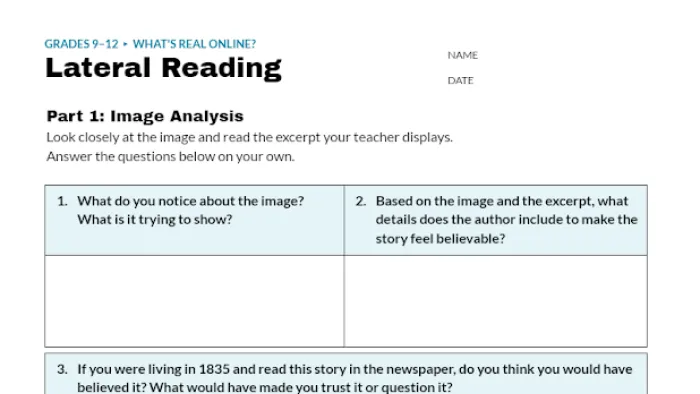
Lateral Reading – a way to check the credibility of online information by leaving the source and seeing what other sources say about the claim and who made it
Cognitive Bias – a systematic error in the way we think that affects how we process and understand information
Confirmation Bias – the tendency to interpret information in a way that affirms what we already believe
Availability Bias – the tendency to judge how true something is by how easily and vividly we can picture it
Illusory Truth Effect – the tendency to believe something more the more often we hear it, whether or not it's true
 Sign in or join
to unlock this free lesson
Sign in or join
to unlock this free lesson