LESSON
Loot Boxes and the Cashless Effect

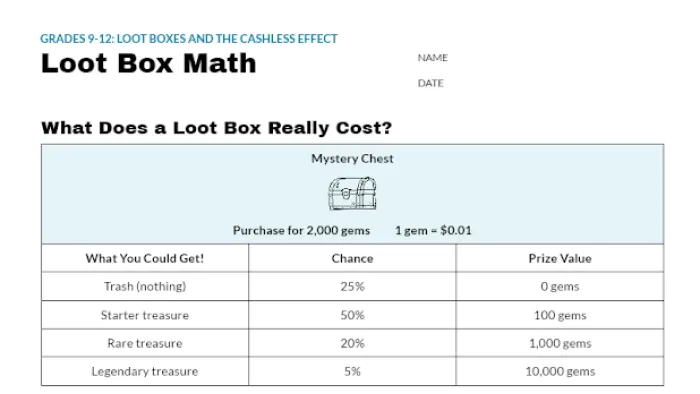
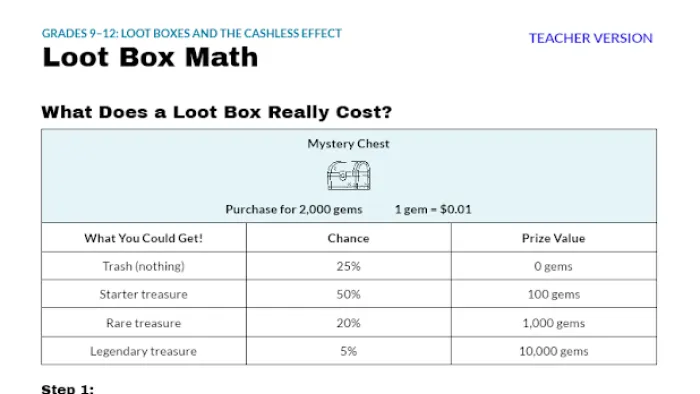
Every game seems to have its own currency, whether it's gems, coins, or V-Bucks, and it's easy to spend these without ever being aware of how much real money they cost. In this lesson, students work out the math behind the virtual price of a single loot box to uncover the real dollar cost hidden inside. Students also learn how virtual currency is designed to make spending feel less real (the cashless effect), and see how the same design shows up in many different types of real-life transactions, like tap to pay, one-click checkout, and options to buy now, pay later. The goal is simple: to realize how much you're really spending, and how the design is built to keep you from noticing.
Objectives
- Explain how virtual currency is designed so you don't notice how much you spend
- Calculate the real dollar cost hidden in a loot box's in-game price
- Reflect on how the same spending design shows up in other types of transactions and why being aware of this matters
Vocabulary
 Sign in or join
to unlock this free lesson
Sign in or join
to unlock this free lesson